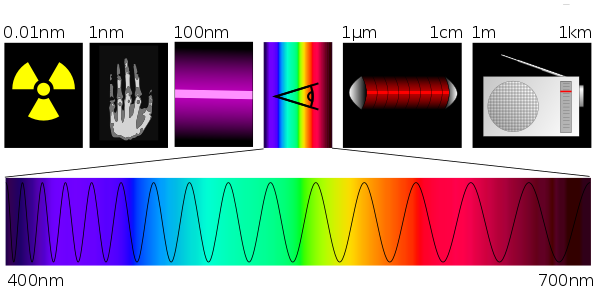
The light is not seen.
We can see only light sources.
The world we live in is visible only because the material reflects light becoming a source of indirect light emission. If the matter
absorb all the light the world would be black and therefore not visible, if the matter is transparent to light we would not see anything except the sun and stars.
Specular:
Every day you look in the mirror (not always willingly). What is the most immediate example of specular reflection.
Specular reflection is given by smooth surfaces that do not absorb light or absorb only a part.
You can also mirror on the metal surface of a car, if the car is red it means that the paint in a non-mirror reflects the red wavelengths but reflects other mirror, allowing us to see our own face reflected.
Wild: . On the edge of the two means, the wave speed and direction change.
An example is looking in a full glass of water containing a straight object, like a pen, partly submerged and tilted, the object appears bent from the water surface.
Each half can only be transparent to some wavelengths but not others such as color filters.
Download this post formats pdf
We can see only light sources.
The world we live in is visible only because the material reflects light becoming a source of indirect light emission. If the matter
absorb all the light the world would be black and therefore not visible, if the matter is transparent to light we would not see anything except the sun and stars.
Specular:
Every day you look in the mirror (not always willingly). What is the most immediate example of specular reflection.
Specular reflection is given by smooth surfaces that do not absorb light or absorb only a part.
You can also mirror on the metal surface of a car, if the car is red it means that the paint in a non-mirror reflects the red wavelengths but reflects other mirror, allowing us to see our own face reflected.
Wild: . On the edge of the two means, the wave speed and direction change.
An example is looking in a full glass of water containing a straight object, like a pen, partly submerged and tilted, the object appears bent from the water surface.
Each half can only be transparent to some wavelengths but not others such as color filters.
Download this post formats pdf